Kristina Toth
The Good Nurse: A True Story of Medicine, Madness, and MurderKristina Toth is the daughter of Ottomar Schramm, a stroke patient whose death at Easton Hospital becomes one of the cases that exposes suspected poisoning within the hospital. Her role is defined by a sharp reversal: she first accepts the explanations and authority of medical staff, then insists on an autopsy when evidence of unauthorized Digoxin in her father’s blood makes his death impossible to regard as an ordinary decline.
Daughter and Patient
By the time Ottomar was admitted to Easton Hospital, his strokes had been progressing for about a year. Each had taken away more of his physical independence; he could no longer put on his socks or manage stairs. To Kristina, however, he remained her father, even when he lay unconscious among tubes and wires. She took comfort in his practical nature, his savings, and his living will. His condition seemed to belong to the familiar hardships of age, and she believed that he was in the hands of professionals.
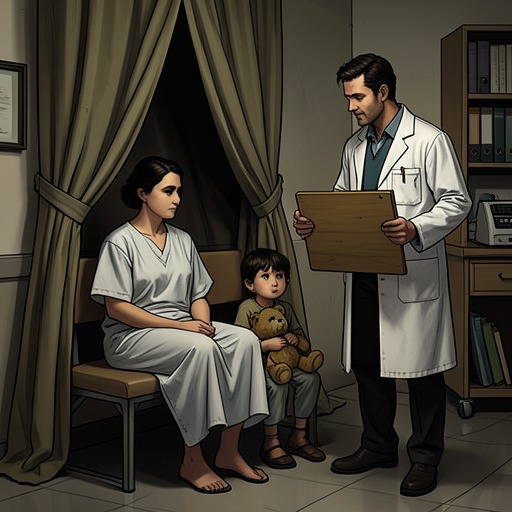
That trust shapes her first response to Nurse Charles Cullen. Kristina noticed a male nurse with a syringe, but was not sure whether he was a nurse at all. Cullen told her he needed to take her father for tests and explained that the syringe was in case Ottomar’s heart stopped. Kristina did not think her father had a heart problem, but deferred to the nurse’s apparent expertise. The exchange was unsettling in retrospect; at the time, it did not yet give her a reason to challenge the care he was receiving.
From Recovery to Alarm
On December 29, 1998, Kristina visited and found her father waxy and markedly worse. Doctors said the deterioration did not appear to be related to his stroke. His heart rate wavered, his blood pressure fell, and Kristina began preparing herself for his death. When she returned the following morning, however, she was told that he had stabilized and was improving. His responsiveness increased over the next days. Ottomar’s wife and daughter came nearly daily, bringing cookies and a hot thermos; Kristina kissed his head before leaving for work. As his condition appeared to turn around, she allowed herself to hope that the worst had passed.
On the third afternoon, Ottomar’s longtime general practitioner, Dr. Robert Silberman, called with a different account. Someone at the hospital had ordered blood tests that had not been authorized, and they showed Digoxin in Ottomar’s blood, although he had never been prescribed the drug. Silberman described the level as extraordinarily high and promised follow-up results. At 1:25 a.m., he called again: the new test confirmed the finding, and Ottomar was dead. He urged Kristina to request an autopsy if the hospital offered one. She did not yet know why the tests had been ordered or who had administered the drug, but the result transformed an unexplained medical crisis into a possible crime.
The Autopsy Decision
The next morning, Kristina and her family returned to the hospital. Ottomar’s room was empty; Cullen, still on the night shift, led them to another room where her father’s body had been cleaned, combed, and disconnected from the machines. Cullen said he would give them time. Kristina felt uneasy at the implication that their time with Ottomar was something the nurse could grant, but did not confront him then.
Cullen soon returned to ask whether the family planned to request an autopsy. Kristina remembered Silberman’s warning and said they were considering it. Cullen responded by invoking Ottomar’s living will, which rejected extraordinary measures such as life support. He argued that an autopsy would be even more intrusive and would violate the spirit of his father’s wishes. Kristina did not accept that comparison. She told Cullen to leave the room rather than debate the matter with him.
The questioning did not end. A second nurse asked whether the family would request an autopsy, and Kristina, unsure whether staff were communicating with one another, again said they had not decided. A third nurse asked the same thing a few minutes later. This time Kristina stated plainly that they wanted an autopsy and accused someone at the hospital of giving her father an overdose. The nurse warned her not to say anything more. Kristina’s insistence marks a decisive change: where she had initially accepted the explanations offered by caregivers, she now treats the possibility of deliberate harm as something that must be investigated.
Narrative Significance
Kristina’s account gives the suspected poisoning a family perspective grounded in ordinary acts of care: visiting nearly every day, bringing food and a hot drink, and kissing her father goodbye on the way to work. Those details make the brief return of hope consequential. Ottomar had seemed to be improving; his death therefore followed not only a frightening decline but a recovery his family had begun to trust.
Her confrontation with Cullen also shows how the living will, an expression of Ottomar’s wishes about treatment, could be invoked in a moment when the question was no longer whether to prolong his life but whether to investigate his death. Kristina does not claim to know who administered the Digoxin. Instead, the confirmed test result and the repeated questions about an autopsy lead her to demand an examination and voice her suspicion. Her account makes that demand a turning point between institutional reassurance and a family member’s insistence that the circumstances of death be scrutinized.